Advertisement
Click to download now, finish the installation quickly, and directly unlock the "all-round experience"
Advertisement
Screenshots
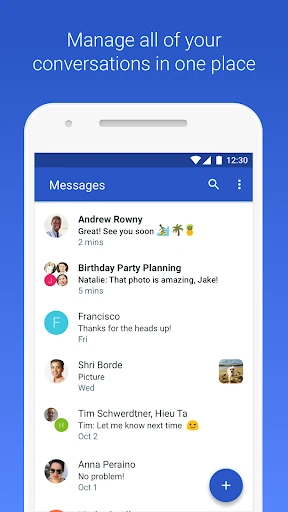
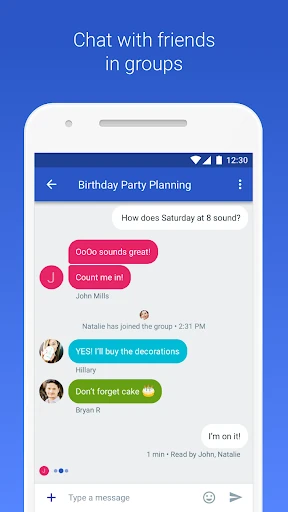
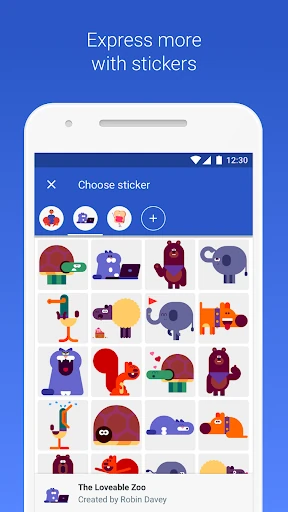
Click to download now, finish the installation quickly, and directly unlock the "all-round experience"
Carrier Services serves as the critical infrastructure layer for modern Android communication, specifically bridging the gap between mobile carriers and the Rich Communication Services (RCS) protocol. As the digital successor to SMS/MMS, it is an essential background component that enables a data-driven messaging experience. Its role is less about user interaction and more about system stability, ensuring that Google Messages can reliably deliver advanced features across fragmented carrier networks. From an analyst's perspective, it is a vital utility that transforms a simple texting app into a modern chat platform comparable to proprietary third-party messengers.
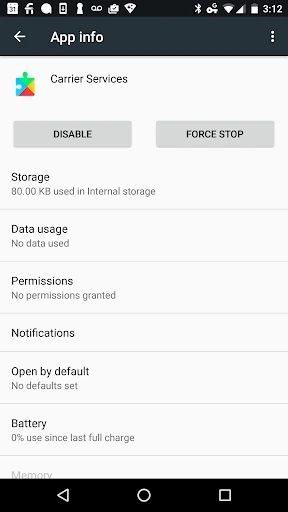
From a UI/UX perspective, Carrier Services is designed to be invisible. There is no graphical user interface (GUI) for the user to interact with; instead, it operates as a system-level background process. The success of its UX is measured by the seamlessness of the messaging experience within the Google Messages app. When functioning correctly, the user remains entirely unaware of its existence, which aligns with the design philosophy of system utilities meant to minimize user friction and maximize background reliability.
Google should focus on improving the diagnostic transparency of the service for the end-user. Providing a simple status indicator or a "connection health" check within the system settings could help users troubleshoot RCS issues without needing to manually clear app caches or guess at the source of the problem. Furthermore, more aggressive power-management optimization during low-signal scenarios would prevent the service from taxing the battery while searching for a stable RCS handshake.
Carrier Services is a mandatory component for any Android user who relies on Google Messages as their primary communication tool. It is not an app for "usage" in the traditional sense, but a requirement for modern functionality. This service is recommended for all Android users; ensure it is kept updated to the latest version to maintain secure, feature-rich, and stable communication across all mobile networks.